 0.00
0.00
 0
0

No Blog Found
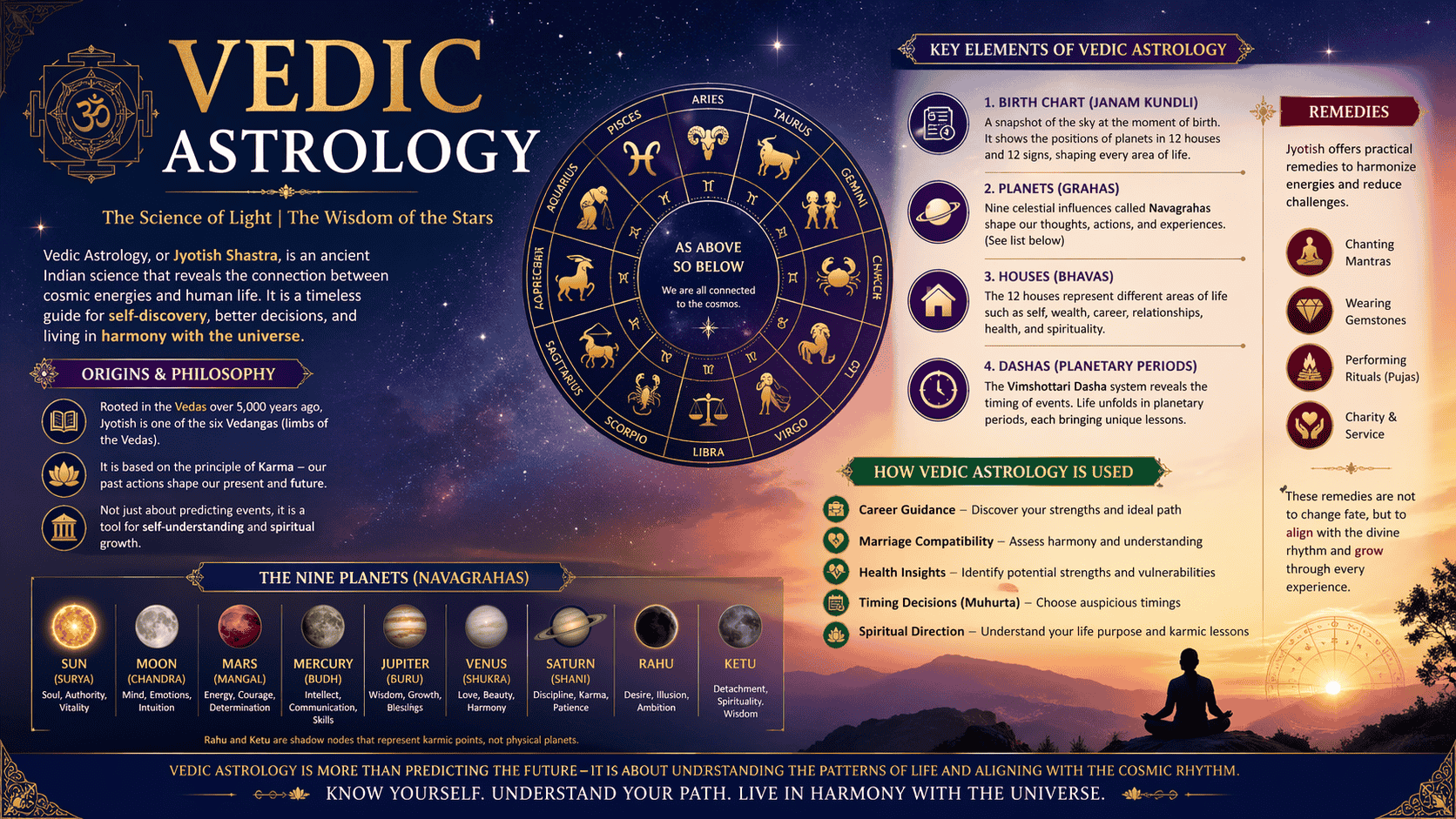
Vedic Astrology, also known as Jyotish Shastra (the “science of light”), is one of the oldest systems of astrology in the world, rooted deeply in the spiritual and philosophical traditions of ancient India. Unlike modern Western astrology, which is largely based on the tropical zodiac, Vedic astrology follows the sidereal zodiac, aligning more closely with the actual positions of constellations in the sky. This distinction gives Jyotish a unique approach to interpreting cosmic influences on human life.
Origins and Philosophy
Vedic astrology traces its origins back over 5,000 years to the Vedas, the sacred texts of Hinduism. It is considered a Vedanga, meaning a limb of the Vedas, and was traditionally used to determine auspicious timings for rituals, ceremonies, and daily activities.
At its core, Vedic astrology is not just about predicting events—it is a tool for self-understanding and spiritual growth. It operates on the principle of karma, suggesting that our present life circumstances are shaped by past actions, and the planetary positions at the time of birth reflect this karmic blueprint.
Key Elements of Vedic Astrology
Unlike physical planets, Rahu and Ketu are shadow nodes representing karmic points.
How Vedic Astrology Is Used
Vedic astrology is widely used for:
Remedies in Vedic Astrology
A unique aspect of Jyotish is its emphasis on remedies. These are not seen as ways to “change fate,” but rather to harmonize one’s energy with planetary influences. Common remedies include:
These practices aim to reduce negative influences and enhance positive ones.
Scientific or Spiritual?
Vedic astrology sits at the intersection of science, philosophy, and spirituality. While critics question its empirical validity, millions of people rely on it as a guiding system. Its true value often lies in its ability to provide perspective, clarity, and a framework for introspection.