 0.00
0.00
 0
0


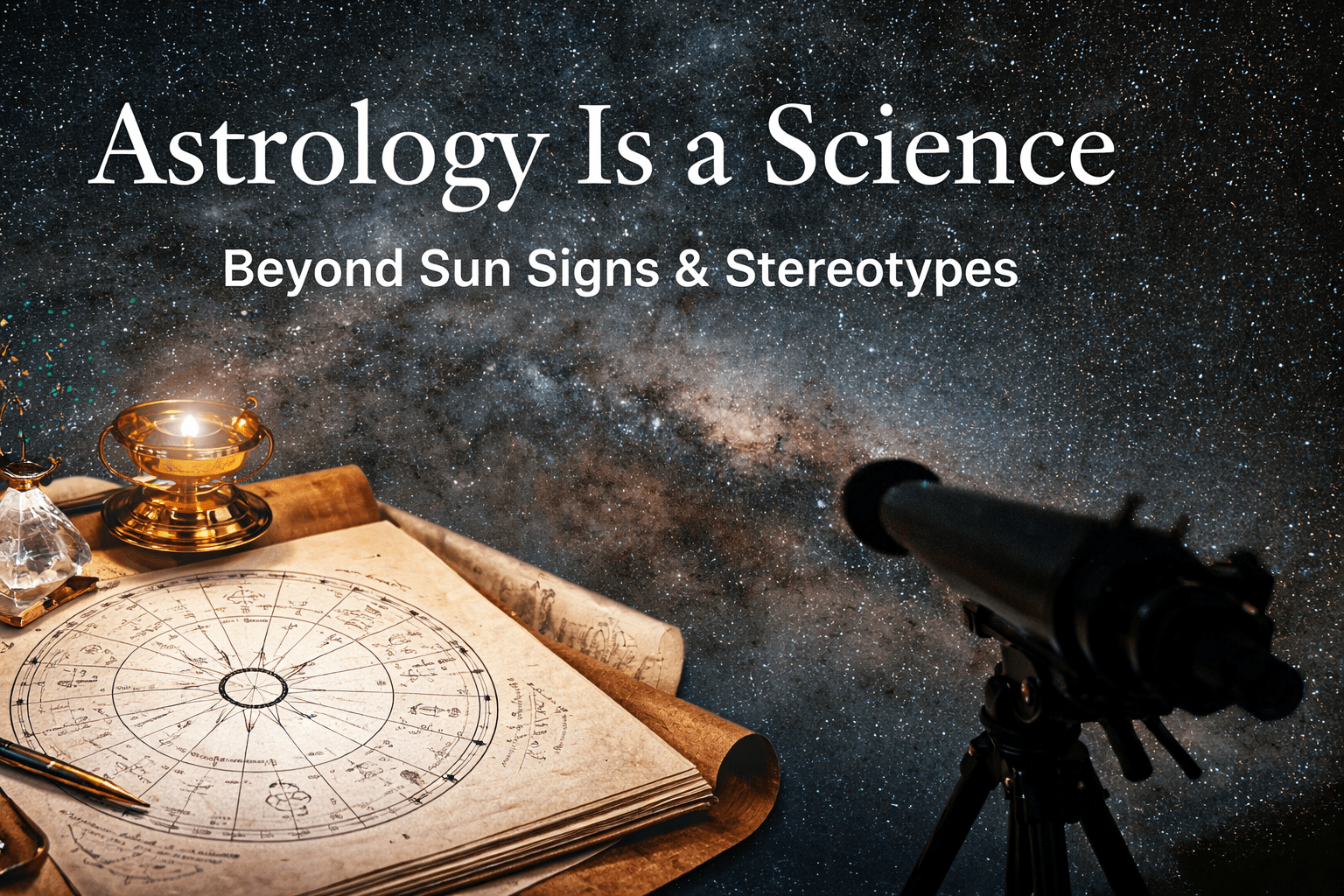
Astrology is often misunderstood as a simple belief system limited to daily horoscopes or sun sign predictions. In reality, astrology is a vast and complex discipline that goes far beyond zodiac columns in newspapers. It is a structured system of observation, calculation, interpretation, and analysis that has been practiced and refined for thousands of years across civilizations.
Most people associate astrology only with their sun sign—Aries, Taurus, Gemini, and so on. However, sun signs represent just one small component of an astrological chart. A complete horoscope includes:
Each of these elements is calculated using precise astronomical data such as date, time, and place of birth. This layered structure makes astrology far more detailed and personalized than generic sun sign readings.
At its core, astrology studies patterns—patterns of planetary motion and their correlation with human behavior, events, and psychological tendencies. Ancient astrologers closely observed celestial movements and documented how these cycles coincided with natural, social, and personal changes.
Just like meteorology predicts weather patterns based on atmospheric data, astrology analyzes cosmic patterns to understand tendencies and probabilities in human life. While it may not fit into the modern laboratory-based definition of science, it follows a systematic, rule-based approach grounded in observation and mathematical calculations.
Astrology is also an art. Two astrologers may analyze the same birth chart yet offer different insights based on their experience, intuition, and depth of understanding. This interpretive aspect is similar to psychology, counseling, or even medicine, where diagnosis and guidance improve with expertise and practice.
The art lies in synthesizing multiple planetary influences into meaningful guidance rather than making isolated predictions.
Modern astrology is increasingly used as a tool for self-reflection and psychological insight. Birth charts reveal personality traits, emotional patterns, strengths, fears, and subconscious motivations. In this way, astrology functions as a form of psychoanalysis—helping individuals understand themselves better and make conscious choices.
Rather than dictating fate, astrology highlights tendencies and inner dynamics, empowering people to work on challenges and leverage their strengths.
Astrology does not claim to rigidly predict the future. Instead, it maps timing and cycles. Systems like Vimshottari Dasha, planetary transits, and progressions indicate periods of opportunity, challenge, growth, or transformation.
By understanding these cycles, individuals can plan better—whether it’s career decisions, relationships, investments, or personal development. Astrology offers foresight, not fatalism.
Astrology stands at the intersection of science, art, psychology, and spirituality. Rooted in ancient wisdom yet continually evolving, it adapts to modern needs while preserving its foundational principles.
When approached with logic, ethics, and depth, astrology becomes a powerful framework for understanding life—not as blind belief, but as a structured system that connects cosmic rhythms with human experience.
Astrology is much more than sun signs. It is a science of patterns, an art of interpretation, a method of psychoanalysis, and a gateway to understanding time and potential. Whether one views it as science, art, or philosophy, its enduring relevance across centuries proves its value as a tool for insight, awareness, and guidance in human life.